
If you’re wondering how to get car insurance without a car, a non-owner policy is often the simplest
option. A non-owner auto insurance policy is liability-only coverage that protects you when you drive
borrowed, rented, or shared vehicles. It suits occasional drivers who do not register a vehicle and helps fill
coverage gaps without requiring vehicle ownership.
Key takeaways
- Non-owner auto insurance is liability-only coverage for people who drive borrowed, rented, or shared
vehicles. It generally pays only after the vehicle owner’s policy and only up to the policy limits. - Coverage limits apply to bodily injury and property damage you cause but exclude physical damage to
the vehicle you drive. Optional UM/UIM or MedPay may be available, and rental collision requires
separate coverage. - Good candidates include occasional drivers, students, frequent renters, and travelers without a
household car. If you regularly drive a household vehicle, you should be listed on the owner’s policy or
buy your own auto insurance. - Premiums average around $400-$450 per year nationwide but vary widely by state and insurer. Cost
factors include age, driving record, ZIP code, credit where allowed, frequency of rentals, rideshare use,
and SR-22 filings. - Before buying, have your license and driving history ready, note planned rental or rideshare use,
compare quotes from multiple insurers, and check exclusions and optional coverages. Save proof of
insurance on your phone before you drive.
What non-owner auto insurance covers and does not?
A non-owner policy provides liability protection when you drive vehicles you do not own, allowing
consistent coverage without tying a policy to a specific car. Core liability pays for bodily injury and
property damage you cause to others, including medical expenses, legal defense, and repairs up to your
policy limits. In most incidents the vehicle owner’s insurance pays first; the non-owner policy contributes
only if the owner’s limits are exhausted or no primary policy applies.
Physical damage to the vehicle you drive is excluded from non-owner policies, so collision and
comprehensive losses are not covered. To protect against damage to a rental, accept the rental
company’s collision damage waiver, purchase short-term collision coverage, or confirm rental-damage
protection through your credit card. If you need proof of financial responsibility after a violation, ask
insurers about SR-22 non-owner options.
Who should buy a non-owner policy and who needs a different option?
Non-owner policies suit people who need liability protection but do not own or regularly use a household
vehicle. Good candidates include renters, students living on campus, frequent travelers, and anyone who
borrows or rents cars only occasionally. For occasional drivers, a non-owner policy is often cheaper and
more convenient than buying rental insurance for every trip.
A non-owner policy is not appropriate if you own a vehicle or routinely drive a family or household car. In
those cases you must be listed on the owner’s policy or buy your own auto insurance to obtain primary
collision and comprehensive protection. Insurers may deny or cancel non-owner coverage if they detect
regular household use.Drivers who need an SR-22 filing can often obtain it with a non-owner policy, but expect higher premiums and fewer carrier options.
How much non-owner car insurance costs and what changes your premium?
Factors such as local claim frequency, state minimum limits, and insurer pricing models influence the
final quote.
Major premium drivers include age, driving record, ZIP code risk, credit-based pricing where allowed, and
any required SR-22 filings or higher liability limits. Younger drivers and those with tickets, accidents, or
DUIs typically pay more, while a clean record lowers rates.
You can reduce costs by comparing quotes from three to five insurers, asking about defensive-driving
discounts, and avoiding coverage gaps that create rating penalties. If you borrow the same vehicle
regularly, check whether a short-term named-driver endorsement is available and whether any carrier
discounts apply. For a practical overview of where to buy and what non-owner policies cover, see
NerdWallet’s guide to non-owner car insurance.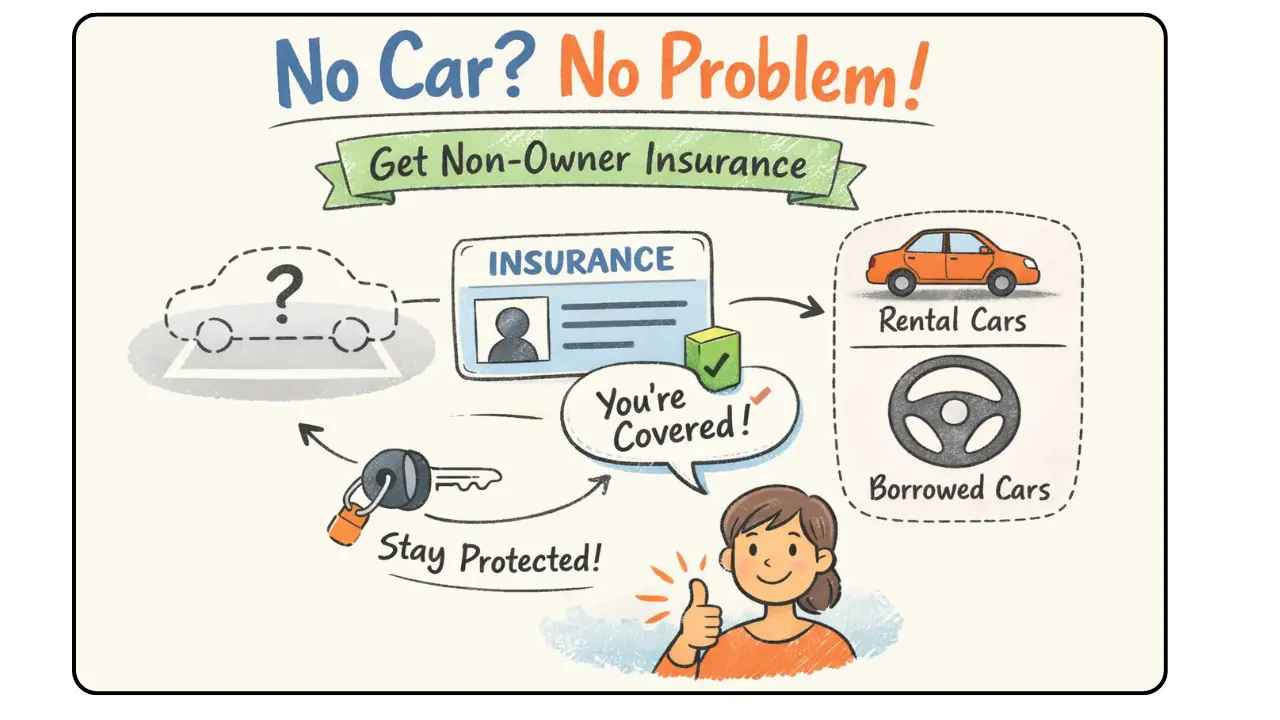
How to get car insurance without a car: step-by-step buying checklist?
1. Gather required information: driver’s license number, date of birth, national ID or Social Security number,
current address, and a driving history listing tickets, accidents, or DUIs. Know whether an SR-22 is
required and be prepared to state that you do not own or lease a vehicle. A vehicle identification
number is not needed for non-owner policies.
2. Decide planned use: note how often you will rent, borrow, or drive for rideshare purposes so insurers can recommend the right product or endorsement.
3. Request quotes: call agents, use carriers that offer online non-owner quotes, or ask an agent to shop
multiple companies on your behalf. Many major insurers outline non-owner options online; for example,
GEICO’s non-owner car insurance page
explains how the coverage typically works.
4. Ask key underwriting questions when you call: confirm the insurer offers non-owner liability coverage,
whether the policy is primary or secondary, and whether uninsured motorist and MedPay are available
in your state.
5. Confirm policy details before binding: verify liability limits, inclusion of UM/UIM and MedPay if
available, the policy effective date, and how you will receive proof of insurance such as an electronic ID
card. If an SR-22 is required, request that the insurer file it for a non-owner policy.
6. Complete purchase and save proof: bind the policy, save policy documents to your phone, and share
details with Ziom patient support if you need transport verification.
Using non-owner coverage for rentals, borrowed cars, and rideshares: limits and alternatives
A non-owner policy can fill liability gaps when you drive other people’s vehicles, but it does not cover every
scenario. Understand the limits and alternatives for rentals, borrowed cars, and ride-hailing to avoid
unexpected out-of-pocket costs.
Rental cars: Liability coverage from a non-owner policy often follows you, but physical damage to the
rental is typically excluded. To cover damage, accept the rental company’s collision damage waiver, buy
short-term collision coverage, or confirm rental-damage coverage through your credit card. Read the
rental contract for exclusions and deductibles before driving off. For a clear explanation of non-owner
limits and where the coverage applies, see Lemonade’s explanation of non-owner coverage.
Borrowed cars: The owner’s policy is normally primary for permissive drivers, and regular use of a friend
or family member’s car usually requires being added as a named driver on the owner’s policy. Relying on a
non-owner policy for ongoing household driving risks denial of claims or cancellation. If you plan repeated
use, secure a standard policy or a named-driver endorsement.
Rideshare and commercial driving: Non-owner coverage generally does not meet commercial
requirements for paid driving. Rideshare drivers typically need a rideshare endorsement, hired and nonowned auto insurance, or a commercial auto policy depending on the platform and state rules. Confirm
the exact coverage you need with your insurer and the ride-hail company before accepting paid trips;
many carriers publish rideshare-specific guidance—for example, Progressive’s rideshare insurance
overview outlines coverage phases for app-based driving.
How Ziom Multi-Speciality patient support coordinates safe transport and recommends trusted insurers
Ziom Multi-Speciality (Sanjeevni Groups) patient support coordinates transport so patients and families
can focus on care. The team books medical taxis and ambulances that meet safety and insurance
standards, checks driver credentials, and arranges wheelchair-accessible vehicles when required. Before
discharge or outpatient appointments, staff verify whether a patient’s existing policy will cover the trip and
provide insurer contact details to avoid surprises at pickup.
When insurance paperwork is needed, Ziom keeps a short list of local agents who handle SR-22 filings
and non-owner policies. Team members prepare the basic information insurers request to speed quotes
and reduce stress for families arranging transport and proof of coverage.
Call Ziom patient support for help making the call or arranging a covered ride; staff can walk you through
binding the right policy for your needs. Support is available 24/7 to coordinate pickups and confirm
insurance details before travel.
How to get car insurance without a car: final steps
A non-owner policy is often the practical way to get car insurance without owning a car, but remember it
covers liability only and will not pay for damage to a vehicle you rent or borrow unless you buy separate
collision coverage. Premiums vary with driving record, rental frequency, age, and state rules, so compare
several quotes to find the best fit for your situation.
Start by checking your driving record and listing any planned rental or rideshare use, then request nonowner quotes from at least two insurers and compare limits, exclusions, and optional add-ons. Save
policy documents to your phone, and contact Ziom Multi-Speciality (Sanjeevni Groups) for 24/7
assistance arranging insured transport to appointments. Securing the right policy before your next trip
reduces financial risk and helps ensure covered travel for medical care.