
Would you buy a car that was once smashed up so badly the insurance company called it a total loss? Sounds risky, right? Yet thousands of Americans do it every year because these “rebuilt title” cars can be thousands cheaper than similar models with clean histories.But here’s the shocking truth most budget buyers miss: that low price comes with strings attached. Harder-to-get insurance, higher premiums, hidden problems that show up later, and a resale value that tanks. Many first-time buyers jump in thinking they’ve scored a deal—only to regret it when repairs pile up or the car won’t pass inspection.If you’re a used car shopper on a tight budget, a first-timer, or just hunting for the best bang for your buck, this guide breaks down the real deal on rebuilt titles, what “rebuilt title insurance” actually means, and whether it’s worth the gamble in 2026.
What Exactly Is a Rebuilt Title?
Let’s start with the basics so you’re not confused at the lot.
A salvage title means the car was declared a “total loss” by an insurance company—usually after a bad accident, flood, fire, or theft recovery where repair costs exceeded a certain percentage of the car’s value (often 70–100%, depending on the state). At that point, the car is basically “branded” as damaged beyond economical repair. You can’t legally drive or register it in most states without fixing it.
A rebuilt title (sometimes called “reconstructed” or “restored”) happens when someone buys that salvaged car, fixes it up, and gets it inspected and approved by the state DMV or a certified inspector. Once it passes safety and roadworthiness checks, the title changes to “rebuilt.” Now it’s legal to drive again.
| Salvage | Rebuilt |
| damaged, not road-legal, hard/impossible to insure. | repaired + passed inspection, road-legal, but forever branded as having a major damage history. |
What Is Rebuilt Title Insurance?
“Rebuilt title insurance” isn’t a special product like gap insurance or title insurance for homes,it’s just regular auto insurance for a car that carries a rebuilt title brand.Most states require you to carry at least liability coverage to drive legally. Many insurers will sell you that. But here’s where it gets tricky:
- Coverage is often limited. A lot of companies only offer basic liability (protects others if you’re at fault). Comprehensive (theft, vandalism, weather) and collision (your damage in an accident) are harder to get or completely unavailable because insurers see the car as higher risk.
- What it covers: Standard stuff liability for injuries/property you cause, maybe uninsured motorist if offered. If you snag full coverage, it pays for repairs after a new incident (minus deductible).
- What it doesn’t cover well: Pre-existing damage from the original wreck is usually excluded. If hidden issues (like frame problems) cause a new failure, claims get denied or payouts slashed because the car’s value is already lower due to the title brand.
- Payout limitations: Even with full coverage, if the car gets totaled again, the insurer pays “actual cash value” which is 20–40% less than a clean-title version of the same car.
You’re buying the same insurance policies, but with more restrictions and higher costs because of the rebuilt status.
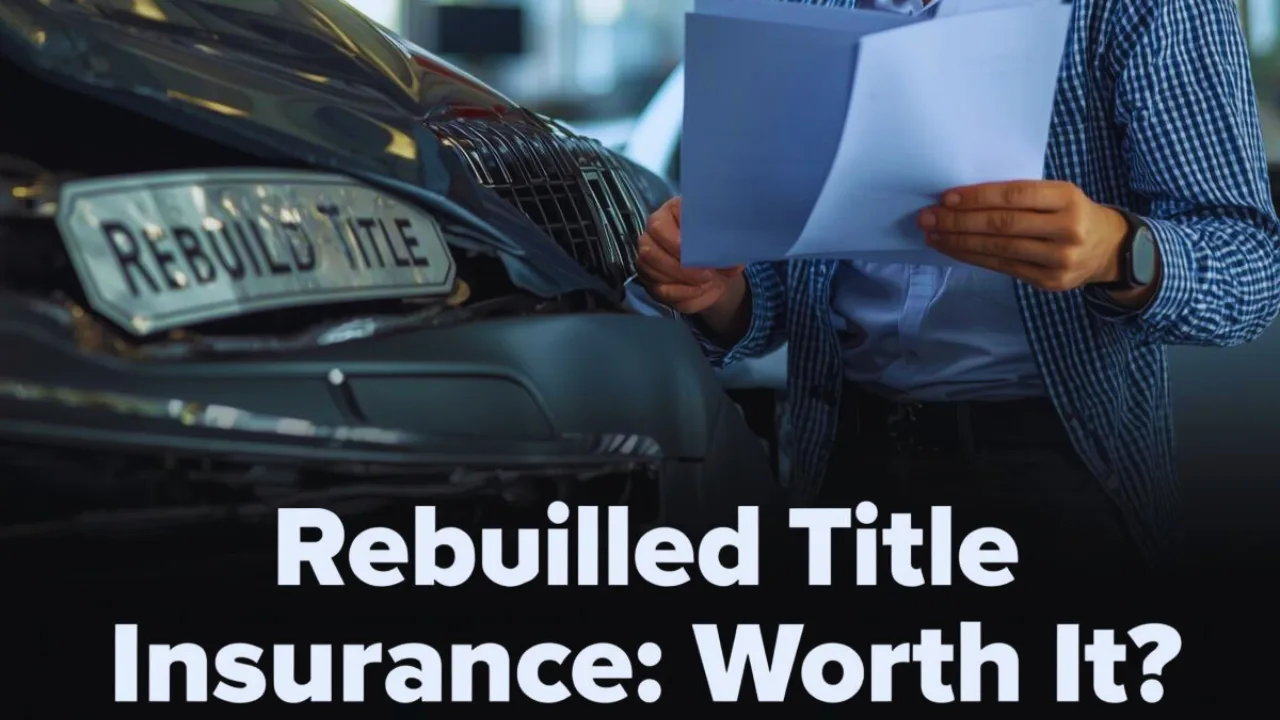
Is Rebuilt Title Insurance Worth It?
It depends on your situation but for most budget buyers, the math rarely works out great long-term.
| Pros | Cons |
| The car itself costs way less upfront often 20–40% below market value for a similar clean-title model. You get some protection: Liability keeps you legal, and if you’re lucky enough to find full coverage, you’re not completely exposed after a new crash. Short-term savings can feel huge if you’re cash-strapped. | Insurance costs more. Expect premiums 20–40% higher than a clean-title car sometimes $200–$500 extra per year. Some folks report paying $1,200–$1,400 annually vs. $1,000 for the same coverage on a normal used car. Limited options. Many big names restrict you to liability-only. Full coverage? Good luck fewer insurers offer it, and when they do, deductibles are higher or exclusions apply. Resale nightmare. When you try to sell, buyers run (or offer pennies). The title brand sticks forever. Higher overall risk. Hidden damage means more breakdowns, safety issues, or expensive fixes down the road. |
For many, the upfront savings get eaten up fast by extra insurance, repairs, and lower resale.
Hidden Risks Buyers Often Ignore
The scariest part? What you can’t see.
- Structural/frame damage. Even after “repairs,” bent frames or poor welding can make the car handle badly or collapse in a crash.
- Electrical/flood issues. Water damage leads to random failures months later—think shorted computers or mold.
- Title washing fraud. Shady sellers move cars across state lines to hide the salvage history.
- Insurance headaches. If you file a claim, adjusters scrutinize everything. Payouts get reduced because “the car was already compromised.”
I’ve heard stories of folks buying a “great deal” rebuilt Honda Civic, only to discover months later the airbags never got replaced properly. Or the frame was patched badly, causing weird pulling and $3,000 in alignment/repair bills that insurance wouldn’t touch.
Real-Life Scenario: The “Deal” That Backfired
Meet Sarah, a first-time buyer in Texas on a $8,000 budget. She found a 2018 Toyota Camry with a rebuilt title for $6,200 $3,000 less than clean-title versions. Score, right?She got liability insurance (the only option her company offered) for about $120/month 30% more than her friend’s clean Camry. Six months in, the transmission started slipping (likely from prior accident stress). Repair quote: $4,200. No coverage for it.She tried selling to trade up best offer was $3,800. She lost money overall, plus extra insurance and stress. Sarah later said, “The savings vanished fast, and I felt like I was driving a ticking time bomb.”
When Should You Consider a Rebuilt Title Car?
It’s not always a terrible idea if you fit these:
- You’re a strict budget buyer who needs wheels now and can pay cash.
- You plan short-term ownership (1–2 years max).
- You’re mechanically savvy or know a trustworthy mechanic who can inspect thoroughly.
- You only need basic liability and don’t care about resale.
When You Should Absolutely Avoid It
Steer clear if:
- You’re a first-time buyer without experience spotting issues.
- You want a long-term reliable daily driver or family car.
- You need financing (most lenders won’t touch rebuilt titles).
- You rely on full insurance coverage for peace of mind.
Experts like Consumer Reports usually say: “Most car shoppers should stay away.”
Tips Before Buying a Rebuilt Title Car
If you’re still tempted, protect yourself:
- Get a pre-purchase inspection from an independent mechanic (not the seller’s shop)—$100–$200 well spent.
- Run a CARFAX/AutoCheck report and verify the title history matches.
- Check your state’s rebuilt title laws inspection requirements vary wildly.
- Shop insurance quotes early ask about rebuilt coverage limits and premiums.
- Compare clean-title options sometimes the “deal” isn’t as big as it looks.
FAQ: Quick Answers to Common Questions
1. Can I get full coverage on a rebuilt title car?
Sometimes, but it’s rare. Many insurers limit you to liability. Shop around—companies like Geico, Progressive, or State Farm sometimes offer more.
2. How much more does insurance cost for rebuilt titles?
Typically 20–40% higher premiums. That could add $180–$480/year depending on your location and coverage.
3. Is a rebuilt title the same as salvage?
No—salvage means unrepaired/total loss (not drivable). Rebuilt means fixed and state-approved (drivable but branded).
4. Does rebuilt title affect resale value?
Yes big time. Expect 20–40% less when selling compared to clean-title cars.
5. Are rebuilt title cars safe?
They can be if repairs were done right and inspected properly. But hidden issues make them riskier than average.
Bottom Line: Proceed with Eyes Wide Open
Rebuilt title cars aren’t automatically lemons, and the insurance you can get isn’t worthless. For some cash-strapped buyers who do their homework, it can be a reasonable way to get on the road affordably.But for most used car shoppers especially first-timers the extra insurance hassle, potential repair surprises, and resale hit make it feel more like a gamble than a smart buy. The “savings” often disappear faster than you think.