
Traditional Curb Appeal: Classic Symmetry and Year-Round Color
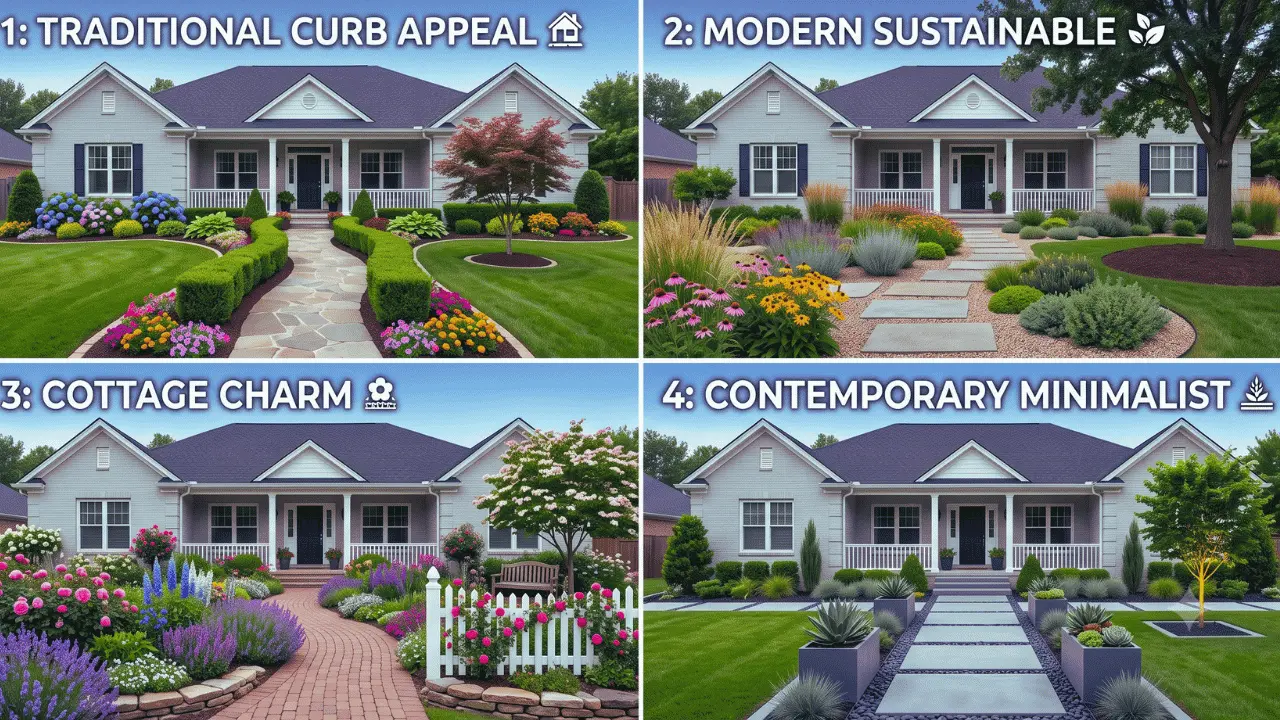
The first of the best 4 landscaping ideas for front of house leans into timeless American residential style. Picture a light brick or siding home with a covered front porch, dark shutters, and a gently curved walkway that guides the eye to the front door. Lush green lawns frame the scene, while layered plantings of shrubs, flowering perennials, and a small ornamental tree create depth and seasonal interest.
Key elements include neatly trimmed boxwood or similar evergreen hedges that define the walkway and foundation beds. Color comes from hydrangeas, hostas, and bright annuals or perennials in shades of blue, pink, yellow, and orange. A Japanese maple or similar specimen tree adds height and a focal point without overwhelming the space. Mulched beds keep the design tidy and reduce maintenance.
This style works especially well for traditional and transitional homes common throughout the USA. It delivers strong curb appeal that feels familiar and welcoming. From a budget perspective, many of these plants are widely available at local nurseries and big-box garden centers. Starting with smaller sizes and allowing them to grow in, using mulch aggressively to suppress weeds, and choosing low-maintenance evergreens for structure keeps costs manageable. Homeowners can phase the project install the walkway and foundation plantings first, then add seasonal color later making this one of the more accessible landscaping ideas front yard USA residents can tackle gradually.
Maintenance stays reasonable: regular mowing of the lawn, seasonal pruning of shrubs, and deadheading flowers keep the look polished. In colder regions, select hardy cultivars; in warmer zones, focus on heat-tolerant varieties that still provide the classic layered effect.
Modern Sustainable: Low-Water Beauty and Ecological Smarts
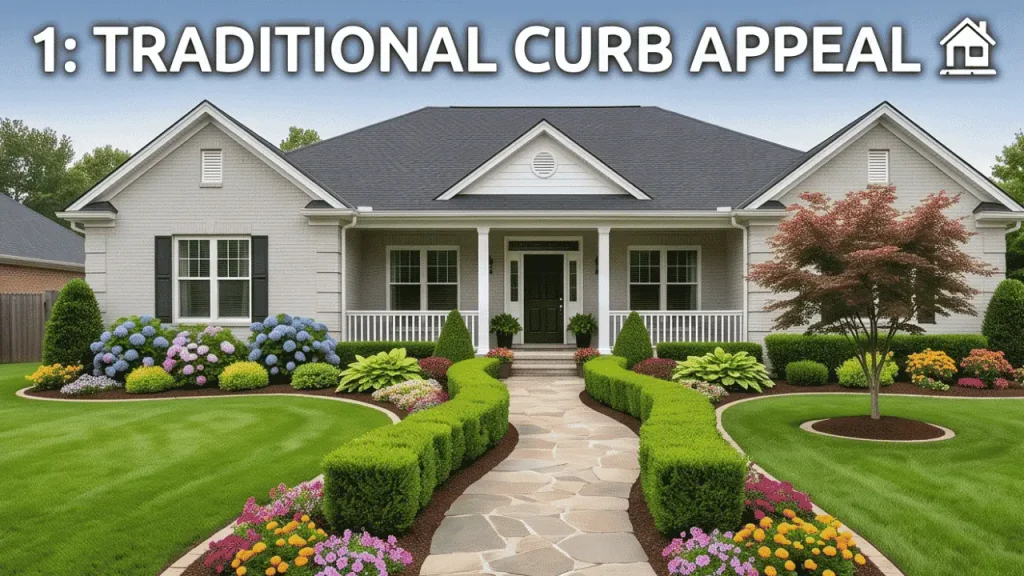
The second approach among the best 4 landscaping ideas for front of house prioritizes sustainability without sacrificing style. Here the lawn is reduced or eliminated in favor of gravel or permeable surfaces, drought-tolerant perennials, ornamental grasses, and native or adapted plants. A series of large concrete or stone pavers creates a clean, modern path to the door, while mixed plantings of coneflowers, black-eyed Susans, blue fescue, and other resilient species provide texture and color.
This design is particularly relevant for landscaping ideas front yard USA homeowners facing water restrictions or high utility costs. Regions such as the Southwest, California, and increasingly the Southeast and Midwest benefit from reduced irrigation needs. Gravel mulch or decomposed granite improves drainage and cuts down on weeding, while the plant palette supports pollinators and local wildlife.
Budget-friendly aspects stand out. Many native plants cost less over time because they require less water, fertilizer, and replacement. Large pavers can be sourced affordably, and the open gravel areas reduce the need for extensive soil amendment or continuous lawn care. Homeowners can begin by converting one side of the front yard and expanding as resources allow. The result feels fresh and contemporary while aligning with growing interest in environmentally responsible landscaping.
This style pairs well with homes that already have clean architectural lines. Even traditional houses can adopt elements of it by replacing thirsty lawn sections with native beds and simplifying the hardscape. Over time the reduced maintenance and lower water bills make it one of the smartest landscaping ideas on a budget available today.
Cottage Charm: Soft Edges, Abundant Blooms, and Informal Warmth
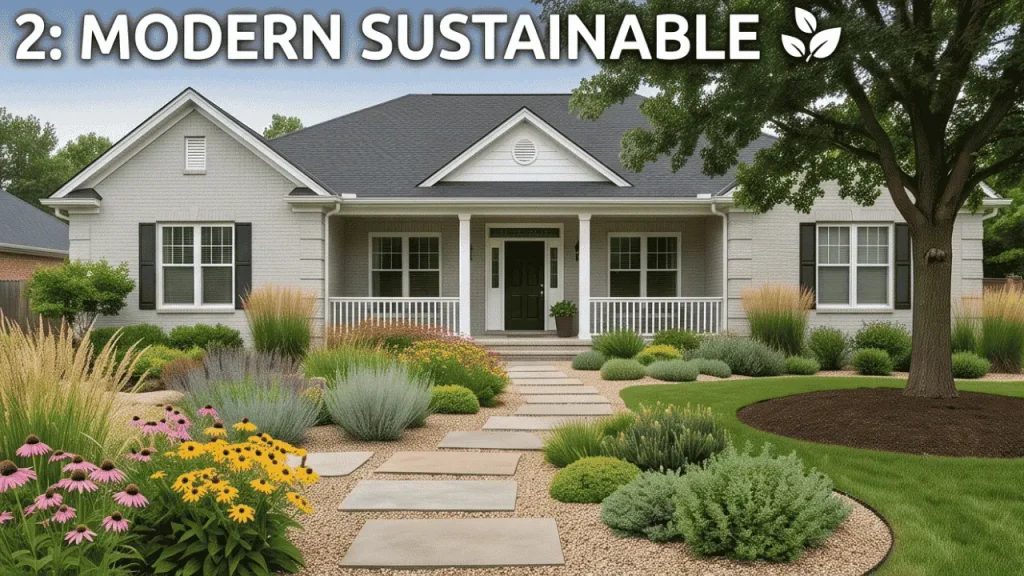
Cottage-style landscaping brings a romantic, lived-in feeling to the front of the house. Curving brick or stone paths meander through dense plantings of roses, lavender, salvia, and other flowering perennials. A low white picket fence or simple garden gate can frame the entrance, while a small bench or seating nook invites lingering. Layered heights, mixed textures, and a slightly informal arrangement create the sense that the garden has grown naturally over time.
This is an excellent choice among the best 4 landscaping ideas for front of house for homeowners who want softness and color rather than strict geometry. It suits cottage, craftsman, and many ranch-style homes across the USA. The abundant blooms provide seasonal interest from spring through fall, and many of the classic cottage plants roses, lavender, catmint, and ornamental grasses are widely available and relatively inexpensive when purchased as smaller specimens.
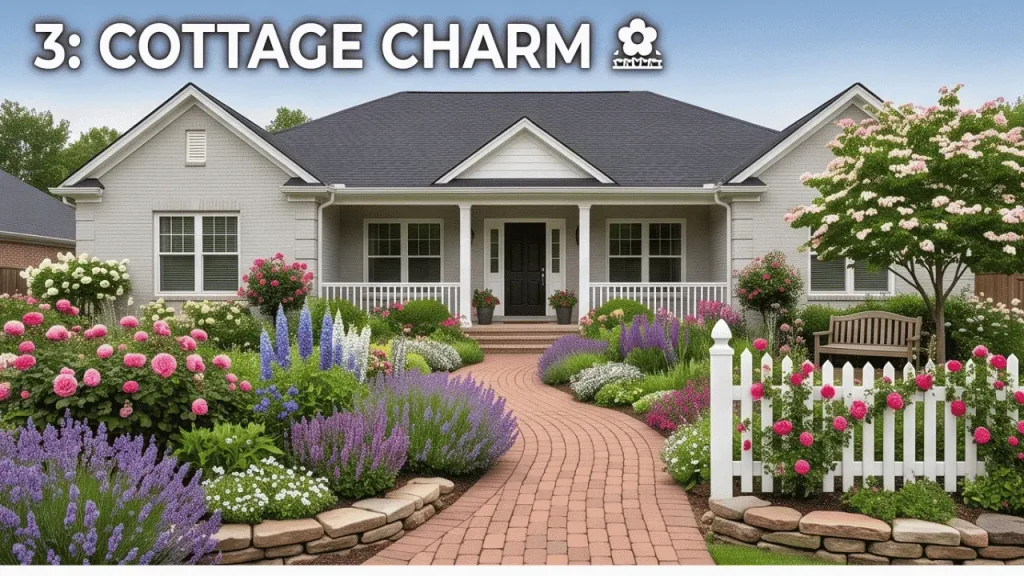
Landscaping ideas on a budget shine here because cottage gardens often rely on division and propagation. Once you establish a few healthy plants, you can divide them to fill more space. Mulching and dense planting further reduce weed pressure and the need for constant replacements. Starting with a focal area near the front door and expanding outward keeps initial costs lower while still delivering immediate charm.
The style is forgiving of imperfect edges and encourages a more relaxed approach to maintenance. Deadheading and occasional cutting back keep plants vigorous, but the overall look thrives on a certain amount of natural abundance rather than rigid control. In various climate zones, simply select regionally appropriate cultivars of the same romantic plant groups.
Contemporary Minimalist: Clean Lines, Strong Structure, and Restrained Planting
The final style among the best 4 landscaping ideas for front of house emphasizes simplicity and geometric clarity. A straight, wide walkway of large concrete or stone slabs leads directly to the entrance. Rectangular planters or carefully placed beds hold architectural plants such as agaves, ornamental grasses, and upright evergreens. Open lawn or groundcover areas provide breathing room, while a few strategically placed specimen trees or sculptural plants create focal points without clutter.
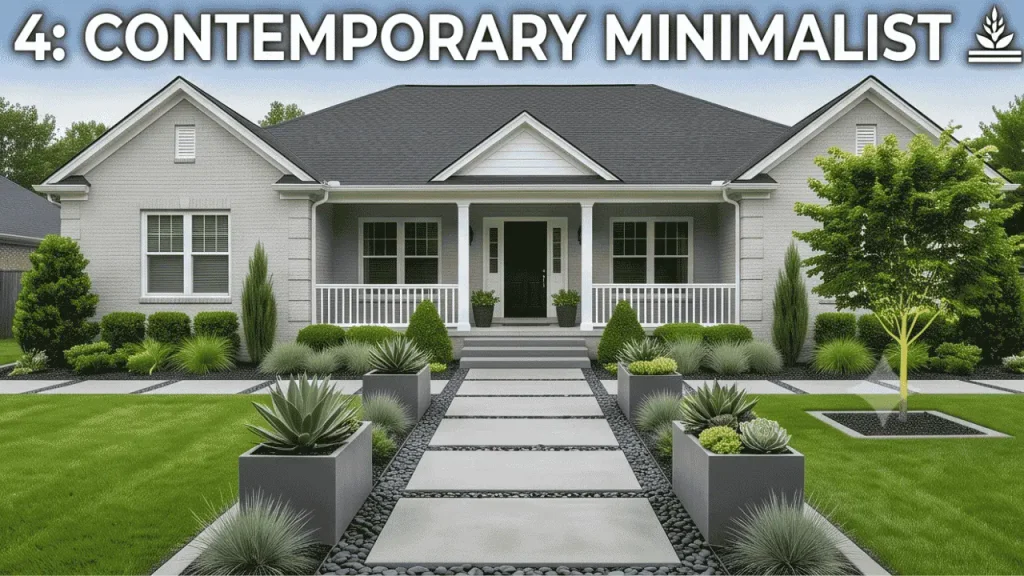
This approach works especially well with modern and contemporary homes but can also refresh traditional architecture by providing contrast. The restrained plant palette reduces visual noise and makes the architecture of the house itself more prominent. Hardscape elements pavers, low walls, or simple planters often form the backbone of the design and can be installed in phases.
From a cost standpoint, contemporary minimalist designs can be highly efficient. Fewer plants mean lower plant material costs. Large-format pavers or poured concrete can be more economical per square foot than intricate patterned surfaces. Maintenance is typically lighter because there are fewer plants to prune, water, and replace. Selecting durable, drought-tolerant species further supports landscaping ideas on a budget while keeping the look polished year-round.
This style also adapts well across the USA. In hotter climates, succulents and grasses thrive with minimal water. In cooler regions, evergreen structure and hardy perennials maintain interest through winter. The key is restraint: choose quality materials and a limited number of strong plant forms rather than filling every space.
Putting It All Together: Practical Tips for USA Homeowners
When choosing among the best 4 landscaping ideas for front of house, consider your home’s architecture, local climate, soil conditions, and how much time you want to spend on maintenance. Traditional and cottage styles often suit older or more classic homes, while modern sustainable and contemporary minimalist approaches feel natural with newer construction or when you want a lower-water, lower-effort yard.
Across all four ideas, several budget strategies apply. Source plants in smaller sizes and allow them to mature. Use mulch or gravel generously to reduce weeds and water needs. Focus first on structure paths, foundation plantings, and key focal points before adding secondary color. Take advantage of native and adapted plants that perform well in your region; they typically require less intervention and cost less over the long term. Many local extension services and native plant societies offer free or low-cost guidance tailored to specific states and hardiness zones.